
Learn the Key Differences, Health Risks, and Legal
Responsibilities Before You Renovate or Demolish
If you live in Alberta and are planning a renovation or demolition project, understanding the
difference between friable and non-friable asbestos is more than just a technical detail. It
determines how dangerous the material is, how it must be handled, and what legal requirements
you must follow.
Whether you’re a homeowner, contractor, or property manager, this guide breaks down the
types of asbestos, how to identify them, and why proper abatement is critical under Alberta law.
What Is Asbestos?
Asbestos is a naturally occurring mineral once used in construction for its fire resistance and
durability. It can be found in drywall mud, floor tiles, insulation, duct wrap, ceiling texture, and
more. Despite being banned in Canada in 2018, it is still present in many Alberta homes built
before the 1990s.
What Does “Friable” Asbestos Mean?
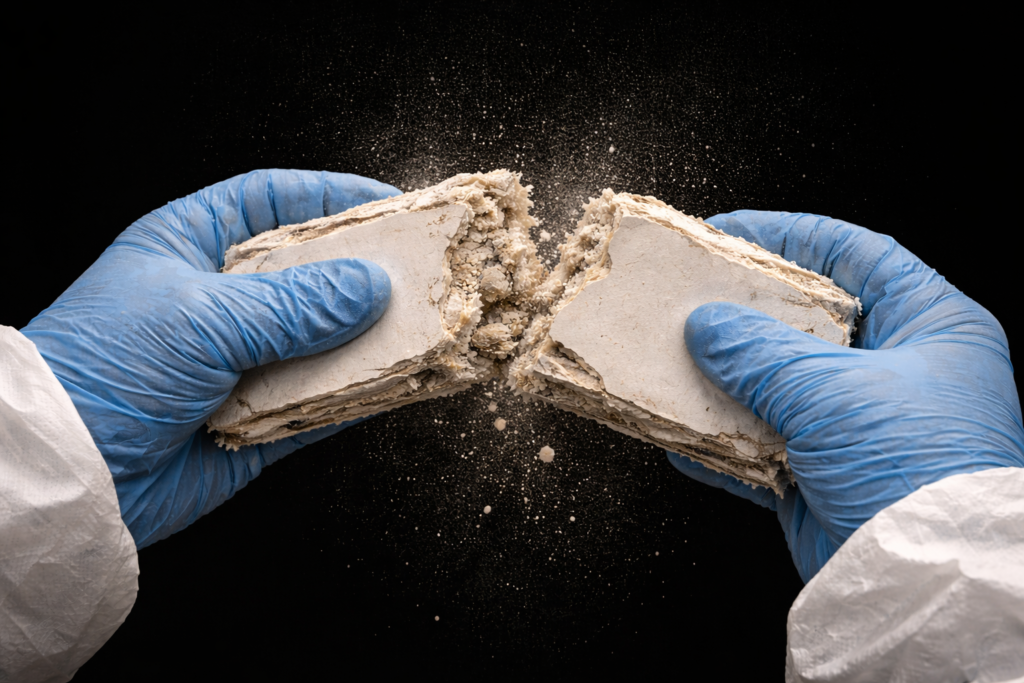
Friable asbestos refers to any material that can be easily crumbled, crushed, or powdered by
hand pressure. This makes it highly dangerous because it releases airborne asbestos fibers
easily, which can be inhaled and cause serious health issues.
Common examples of friable asbestos include:
● Sprayed-on fireproofing
● Pipe insulation
● Boiler insulation
● Loose-fill vermiculite insulation
Friable asbestos is considered high risk and must be removed using strict containment
procedures by licensed abatement professionals.
What Is “Non-Friable” Asbestos?
Non-friable asbestos is bonded within another material, making it less likely to release fibers
unless it is cut, drilled, or otherwise disturbed. While it is more stable than friable asbestos, it still
becomes dangerous when broken or improperly handled.
Wise Abatement Tip: If you can crush it with hand pressure, treat it as high risk.
Friable asbestos releases fibres easily into the air, and that is where the danger begins. Before cutting, sanding, drilling, or removing any suspect material in a pre-1990 Alberta home, stop and get it tested. Disturbing even non-friable asbestos can instantly turn it into a friable hazard.
Common examples of non-friable asbestos include:
● Vinyl floor tiles
● Asbestos cement (transite) panels
● Asbestos-containing ceiling tiles
● Textured coatings
Non-friable materials can become friable during demolition, sanding, or water damage, which is
why risk assessments are required even if materials seem stable.
Why the Difference Matters in Alberta
Under Alberta Occupational Health and Safety (OHS) Code, any demolition or renovation
involving asbestos-containing materials must follow strict procedures depending on whether the
material is friable or non-friable.
Key reasons this classification matters:
● Risk level: Friable materials pose higher health risks
● Abatement procedures: Friable asbestos requires full containment
● Waste disposal: Different handling and documentation rules apply
● Legal liability: Improper classification can lead to stop-work orders, fines, or exposure
lawsuits
How to Know What Type of Asbestos You Have
Visual inspection alone is not enough to determine whether asbestos is friable or non-friable. A
certified testing lab must analyze samples to confirm the type and concentration.
If you are in Calgary or elsewhere in Alberta, a licensed environmental consultant can take
samples safely and provide a detailed report to guide abatement and permitting requirements.

